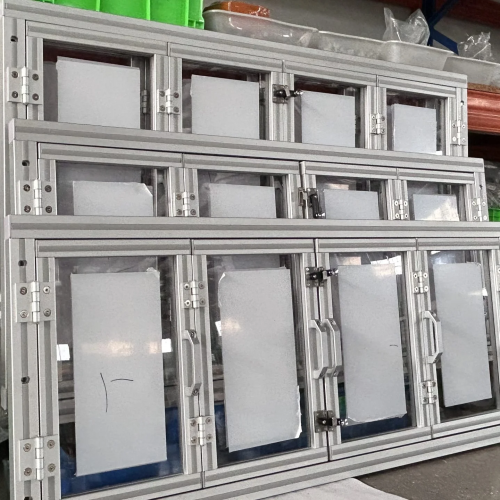
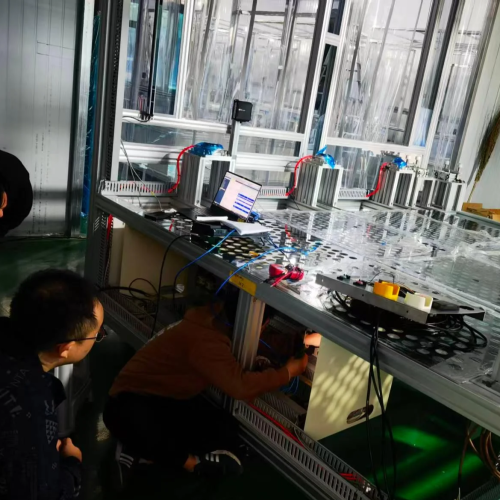
FLOMC
Request Information
FLOMC
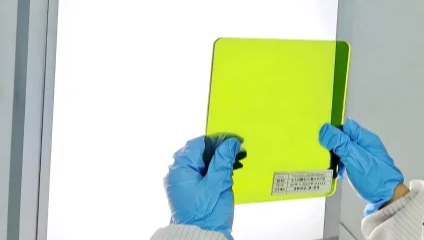
Green transparent panel sample. Appearance only; color does not establish protective performance.
Select viewing panels by wavelength, required optical density and foreseeable exposure conditions. Confirm the protective evidence, visibility and complete installed assembly for the laser application.
Selection starts with the laser source and foreseeable exposure at the panel. Suitability for one process does not establish suitability for another. The equipment's responsible laser-safety professional should establish the hazard assessment and required protective performance.
Review panel dimensions, edges, frames, joints and openings together to prevent hazardous radiation escaping around the material. Access arrangements and required interlocks belong to the equipment-level assessment. Protective-eyewear evidence alone does not establish suitability for a window or guard.
Agree permitted cutting, mounting, cleaning, inspection and replacement procedures for the selected construction. Confirm that any panel modification preserves its required protective function.
Discuss the required delivery form, from selected material to a finished mechanical assembly. Confirm availability and scope for the project.
Define the proposed material, thickness and wavelength-specific protective evidence. Confirm exposure limits, permitted use and visibility needs for the assessed laser application before agreeing the material.
Request a QuoteScope the panel to an agreed drawing and permitted fabrication route. Confirm the outline, clear aperture, edges and inspection requirements without assuming that cutting, drilling or forming preserves the protective function.
Request a QuoteDefine panel, frame and interface responsibilities together. Confirm included components, assembly checks and any separate system-validation requirements before agreeing the supply scope.
Request a QuoteThese are project inputs to confirm, not published product ratings. Agree the selected grade, test methods, conditions and acceptance criteria.
| Review Item | Required Input | Method | Conditions | Status |
|---|---|---|---|---|
| Laser source | All operating wavelengths and emissions | Source specification | All sources and operating modes | To confirm |
| Foreseeable exposure | Power or pulse energy and duration | Hazard assessment | Beam size, pulses and exposure time | To confirm |
| Protective evidence | Wavelength-specific OD and exposure-resistance evidence | Relevant material data | Selected construction and thickness | To confirm |
| Panel geometry | Outline, aperture and edge engagement | Drawing review | Frames, joints and openings | To confirm |
| Viewing performance | VLT and observation requirements | Sample review | Installed lighting and viewing task | To confirm |
| Fabrication and service | Permitted processes and maintenance | Agreed procedures | Cleaning, inspection and replacement | To confirm |
Confirm permitted processing, enclosure interfaces and acceptance evidence.
| Supply Form | Information Required | Scope to Agree | Status |
|---|---|---|---|
| Material | Grade, thickness and finish | Supplied format and supporting evidence | To confirm |
| Processed panel | Drawing, clear aperture and process | Finished-panel inspection requirements | To confirm |
| Agreed assembly | Frame, interfaces and components | Assembly and installed verification scope | To confirm |
No OD, wavelength coverage, exposure-resistance value or certification is stated here. Confirm protective evidence for the selected panel and actual laser conditions. A photograph, color, VLT or protective-eyewear rating does not establish a suitable window or enclosure.
Include the laser specification, exposure conditions, required protection, panel drawing and quantity. Share the equipment-level assessment and preferred delivery scope.
FLOMC operates its own coating line, so supplementary surface requirements can be coordinated with panel selection and fabrication. Laser protection is specified separately by wavelength, attenuation and exposure conditions; coating capability alone is not a laser safety rating.
Optical density describes attenuation at specified wavelengths, not a universal rating across the spectrum. Check evidence for every relevant wavelength and the selected construction.
OD alone does not establish how long a panel can withstand laser exposure without losing protection. Review the applicable exposure conditions, resistance evidence and use restrictions.
Visible light transmission helps assess observation but is not a laser-protection rating. Color and apparent darkness are not substitutes for evidence. Maintain required protection while checking viewing usability.
Agree permitted cleaning, inspection, damage criteria and replacement procedures before installation. Keep panel checks and equipment-level protective validation clearly assigned.
Review every laser source, operating mode and foreseeable exposure before defining the viewing panel. These examples frame the enquiry; they do not establish protection for a particular machine or process.
For observing an enclosed laser process, match protective evidence to the source and exposure conditions. Review panel retention, overlap and surrounding openings alongside the observation task and installed lighting.
Coordinate panels with frames, joints, access points and the equipment-level protection concept. Confirm required interlocks and operating restrictions through the responsible laser-safety assessment.
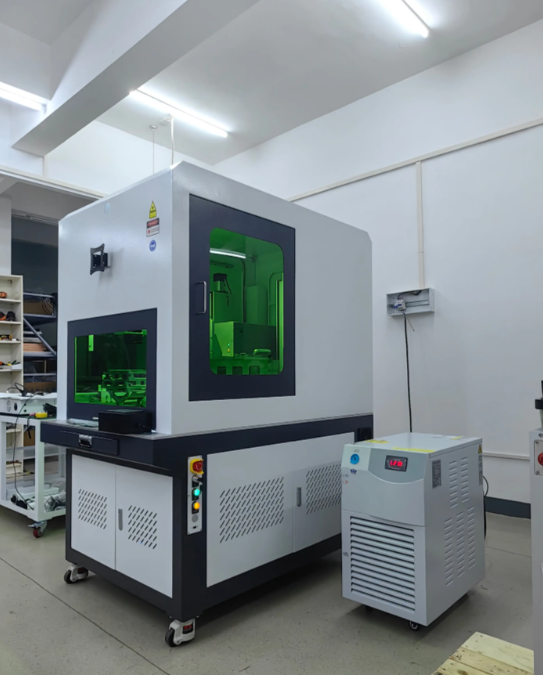
Review wavelength, exposure resistance and visibility before selecting a panel.
No. Confirm wavelength coverage, exposure resistance and the installed assembly. OD alone cannot establish protection for every operating condition.
Possibly, but data must support every relevant wavelength and exposure condition. Provide all sources rather than relying on a laser-type label.
No. Similar colors can have different attenuation characteristics. Select from the required protective data, then assess visibility.
FLOMC can support your project from material selection, surface performance, panel processing, and structural development to OEM integration and installed-site adaptation.
Share the equipment context, viewing requirement, protection concern, or existing structure you are working with. We can help define the next practical direction.

English

German

Italian

Spanish