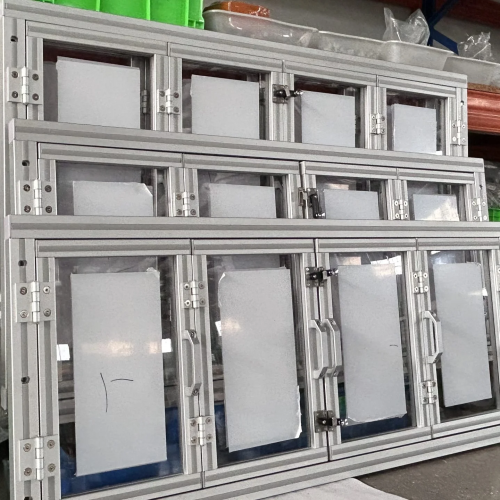
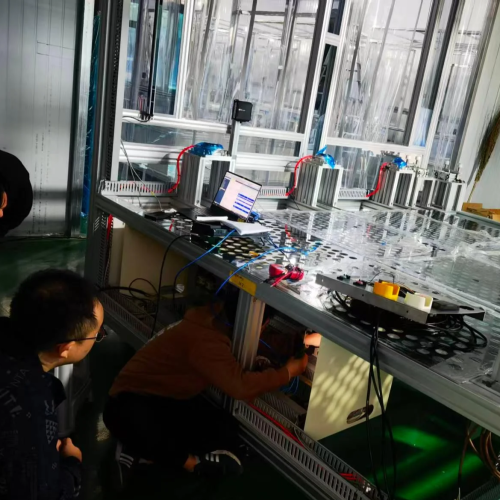
FLOMC
Request Information
FLOMC
Define the intended screening role around the welding process. Review the material, processed panel and barrier integration for the proposed construction and use. Area screening is not direct arc-viewing or electrical arc-flash protection.
Suitable welding-area screens, selected and installed for the assessed exposure, can help protect nearby personnel from hazardous optical radiation while allowing awareness of activity behind the barrier. They are not a substitute for welding filters and personal protection needed by someone intentionally observing or performing welding.
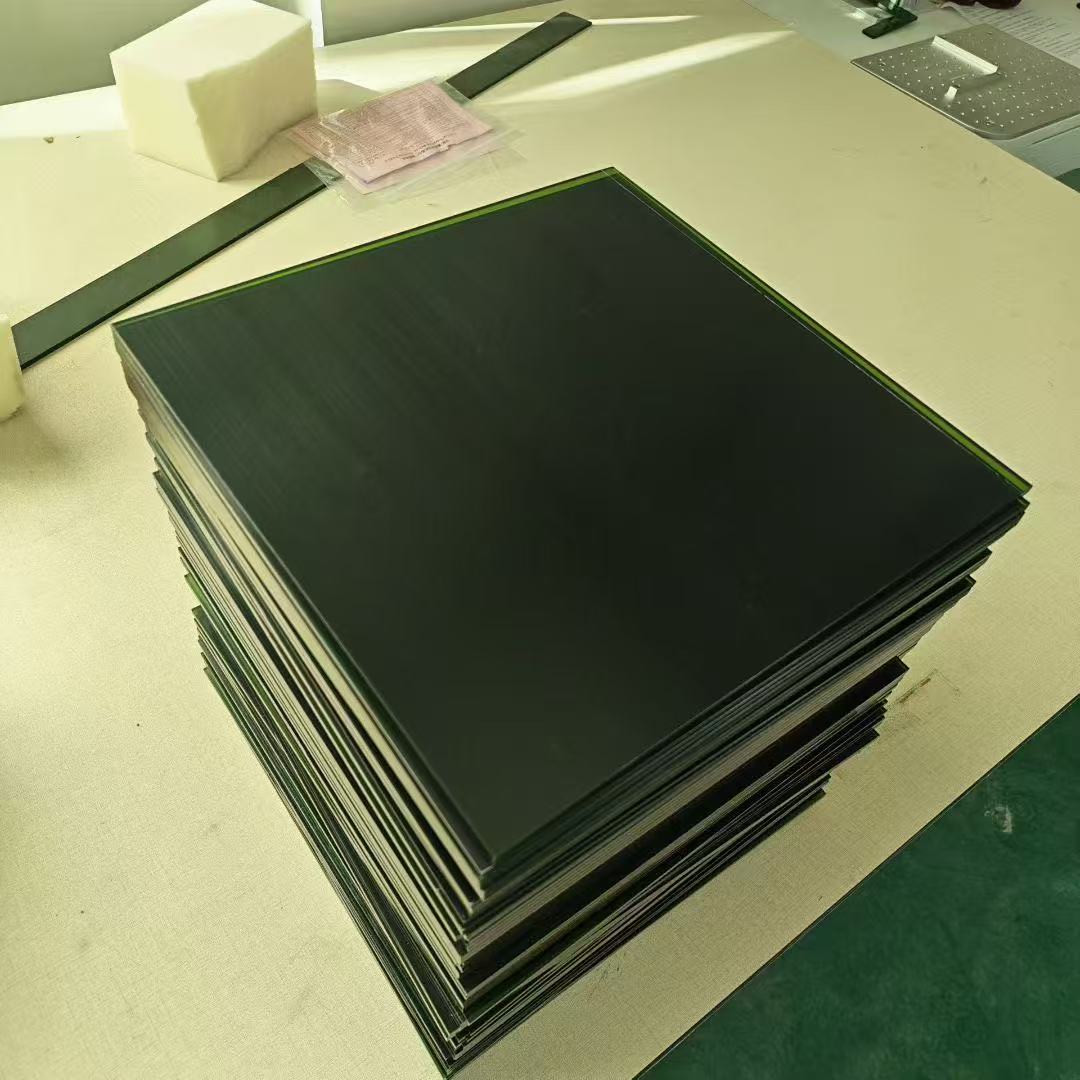
Review the screen with its frame, edges, joints, openings and adjacent barriers. Address exposure paths around and through the screen. Coordinate coverage with access, ventilation and fume extraction rather than treating a transparent barrier as complete welding-hazard control.
Confirm fabrication, mounting and cleaning instructions for the selected construction. Establish inspection and replacement criteria, and agree the mechanical supply boundary.
Discuss the required delivery form, from selected material to a finished mechanical assembly. Confirm availability, intended use, supporting evidence and the supply scope for the project.
Define the proposed construction, thickness and evidence for welding-area screening. Confirm the process, exposure conditions, visibility needs and limits of use before agreeing the material.
Request a QuoteScope the panel to an agreed drawing and permitted fabrication route. Confirm the outline, clear aperture, edges and inspection requirements without assuming that cutting, drilling or forming preserves the protective function.
Request a QuoteDefine panel, frame and interface responsibilities together. Confirm included components, assembly checks and any separate system-validation requirements before agreeing the supply scope.
Request a QuoteThese are project inputs to confirm, not published product ratings. Agree the selected grade, test methods, conditions and acceptance criteria.
| Review Item | Required Input | Method | Conditions | Status |
|---|---|---|---|---|
| Welding process | Process and operating conditions | Process specification | Equipment, work area and personnel | To confirm |
| Foreseeable exposure | Distances and surrounding exposure | Hazard assessment | Optical radiation, spatter and heat | To confirm |
| Protective evidence | Optical-radiation and fire-behavior evidence | Relevant material data | Selected construction and thickness | To confirm |
| Panel geometry | Outline, aperture and edge engagement | Drawing review | Frames, joints and openings | To confirm |
| Viewing performance | Area awareness and visibility needs | Sample review | Lighting, position and screening role | To confirm |
| Fabrication and service | Permitted processes and maintenance | Agreed procedures | Cleaning, inspection and replacement | To confirm |
Confirm permitted processing, barrier interfaces and acceptance evidence.
| Supply Form | Information Required | Scope to Agree | Status |
|---|---|---|---|
| Material | Grade, thickness and finish | Supplied format and supporting evidence | To confirm |
| Processed panel | Drawing, clear aperture and process | Finished-panel inspection requirements | To confirm |
| Agreed assembly | Frame, interfaces and components | Assembly and installed verification scope | To confirm |
No certification or protective rating is claimed here. Where relevant, define applicable ISO 25980 requirements for transparent curtains, strips and screens around arc welding, and request documentation for the proposed construction and use. Do not transfer evidence between products.
Include the welding process, operating conditions, layout, panel drawing, quantity and intended screening role. Share visibility needs, exposure conditions and the preferred delivery scope.
FLOMC's in-house coating line supports coordination of surface requirements with panel design and fabrication. Welding-area screening suitability must still be verified for the source, selected material and installed arrangement; coating capability is not a protection rating.
Ordinary colored transparent sheet is not automatically a welding screen. Review optical-radiation performance, spatter exposure, fire behavior and use restrictions for the proposed construction.
Do not transfer supporting evidence between different products. Confirm whether coatings, laminates, thickness changes or fabrication affect the documented performance of the selected material.
This category concerns welding arc radiation, not electrical arc-flash heat, pressure or blast. Laser welding needs its own laser-protection assessment. Intentional arc viewing needs appropriate welding filters and personal protection.
Agree permitted cleaning, inspection, damage criteria and replacement procedures before installation. Keep panel checks and equipment-level protective validation clearly assigned.
Define the welding process, personnel positions and surrounding layout before selecting the screen. These examples frame a project enquiry, not a claim of protection for a specific installation.
Review screening around the work area to limit optical-radiation exposure to nearby workers and passers-by. Define coverage, distances, adjacent walkways and the intended level of activity awareness without treating the screen as a direct-viewing filter.
Coordinate screened panels with frames, joints, access openings and adjacent barriers. Keep ventilation, fume extraction, personal protection and other welding controls within the overall risk assessment.
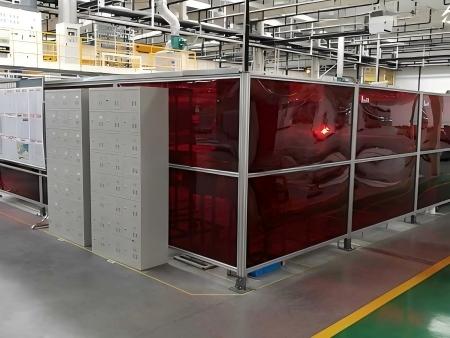
Confirm the screening task, material evidence and installation before selecting a panel.
Do not assume so. Surrounding-area screens are not welding filters for intentional arc viewing; specify that separate task and its required protection.
No. Request supporting evidence for the exact material and intended conditions, not just a color description.
This category addresses welding arc radiation. Electrical arc-flash thermal and blast hazards require a separate assessment and protective solution.
FLOMC can support your project from material selection, surface performance, panel processing, and structural development to OEM integration and installed-site adaptation.
Share the equipment context, viewing requirement, protection concern, or existing structure you are working with. We can help define the next practical direction.

English

German

Italian

Spanish